

-
Regular price€35,00Regular priceSale price€35,00Unit priceper
WAM Protein - Pure Vanilla
-
![WAM Protein+ Chocolate Hazelnut 900g pouch, front: vegan, no sucralose, made in Germany, 21g protein and 2.5g leucine per serving]() Regular price€35,00Regular priceSale price€35,00Unit priceper
WAM Protein - Chocolate Hazelnut
Regular price€35,00Regular priceSale price€35,00Unit priceperWAM Protein - Chocolate Hazelnut
-
Regular price€35,00Regular priceSale price€35,00Unit priceper
WAM Protein - Iced Coffee
-
Regular price€35,00Regular priceSale price€35,00Unit priceper
WAM Protein - Banana Bread
-
Regular price€47,00Regular price
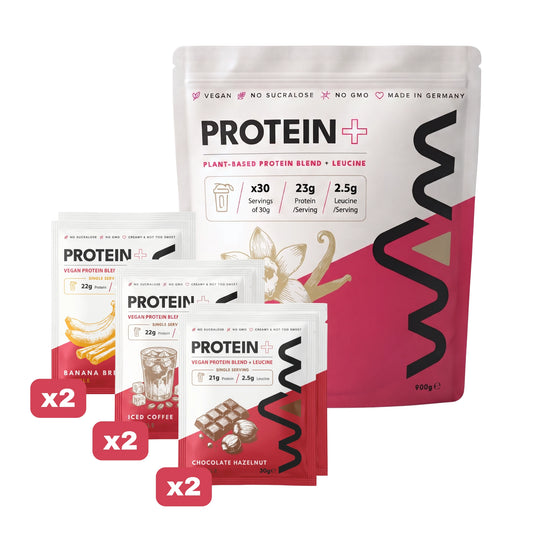
€51,50Sale price€47,00Unit priceperWAM Protein - Starter Pack
-
Regular price€24,00Regular price
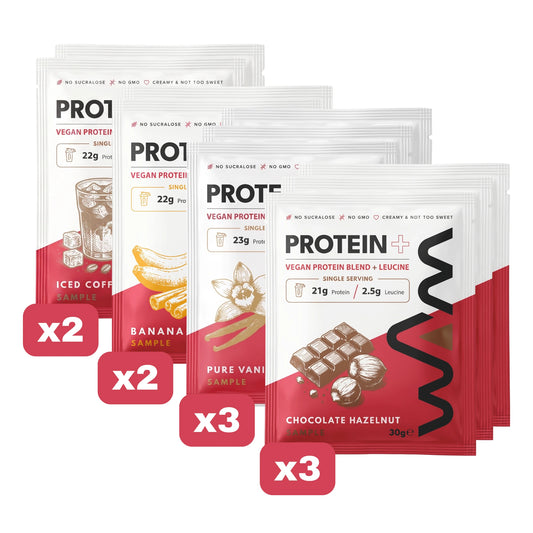
€27,50Sale price€24,00Unit priceperWAM Protein Powder Sample Pack
-
![White and red WAM stainless steel shakers with engraved "We Are More" logo, steel collar and black flip-top lid]() Regular price€18,00Regular priceSale price€18,00Unit priceper
Stainless Steel Shaker
2 colours
Regular price€18,00Regular priceSale price€18,00Unit priceperStainless Steel Shaker
2 colours
-
Regular price€4,00Regular priceSale price€4,00Unit priceper
Stainless Steel Scoop
-
Regular price€25,00Regular priceSale price€25,00Unit priceper
WAM Creatine - Creapure®
-
Regular price€2,75Regular priceSale price€2,75Unit priceper
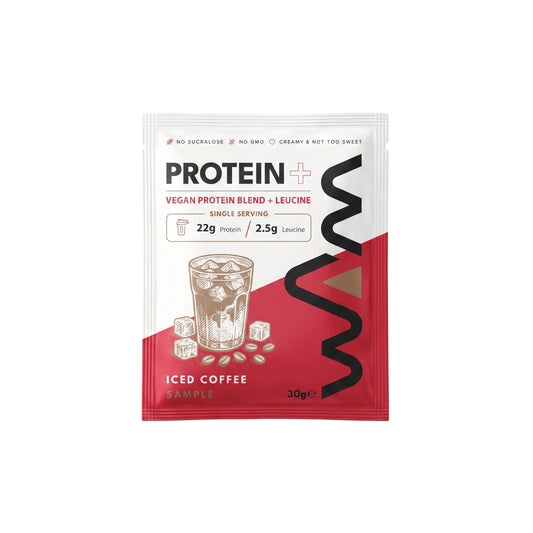
Protein Sample - Iced Coffee
-
Regular price€2,75Regular priceSale price€2,75Unit priceper
Protein Sample - Pure Vanilla
-
Regular price€2,75Regular priceSale price€2,75Unit priceper
Protein Sample - Banana Bread
-
Regular price€2,75Regular priceSale price€2,75Unit priceper
Protein Sample - Chocolate Hazelnut






How WAM compares
What goes into your shaker, at a glance.
| WAM Protein | Typical vegan protein | Typical whey | |
|---|---|---|---|
| Sweetener | A little stevia only | Often sucralose | Often sucralose |
| Leucine per 30 g serving | 2.5 g in total | approx. 1.6–1.8 g* | approx. 2.4 g* |
| Dairy ingredients | None – 100% vegan | None | Yes, made from milk |
| Baking above 120 °C | Yes – stevia is heat-stable | Not advised with sucralose** | Not advised with sucralose** |
| Heavy-metal results | Published | Varies by brand | Varies by brand |
| Made in | Germany (IFS Food) | Varies by brand | Varies by brand |
WAM: 2.5 g leucine in total per 30 g serving, from the plant proteins plus added leucine. * Approximate values for a serving with about 22 g protein, calculated from published amino acid profiles of whey, pea and rice protein (Gorissen et al., Amino Acids 2018). Varies by product. ** Germany’s BfR advises not to heat sucralose-containing foods above 120 °C (Mitteilung 015/2026).
WE ARE MORE
At WAM, we don't cash in on insecurities with pink packaging and false promises – we just want to make nutrition easier! Our vegan, no-nonsense products are developed by our founder Anna, a PhD chemist and certified sports nutritionist – and made for Every Body.
We want to crush fitness industry stereotypes – represent and support all those who want to live healthier, more active lives – regardless of what their bodies look like.
Because strength is for everyone.


MADE IN GERMANY
When searching for a protein powder to support her own fitness goals, our founder Anna couldn't find one that ticked all her boxes.
That’s why we set out to do things differently: our 100% vegan protein powder is produced in an IFS Food-certified facility in Germany, and our packaging is made in Germany too. Instead of a single-use plastic scoop in every bag, we give simple tea- and tablespoon measurements.


WHEY-LEVEL LEUCINE. 100% PLANT-BASED.
We combined soy, rice and pea protein isolates and added extra leucine, so every 30 g serving gives you 2.5 g of leucine in total – about the same as a typical serving of whey, made entirely from plants.
WAM is sweetened with a small amount of stevia – never sucralose or other artificial sweeteners. Flavourings, fruit powders and plant extracts give it a balanced taste and a light, creamy texture.
WAM is regularly tested for quality and safety, and we publish our heavy-metal results. See the test results here.


MAKING NUTRITION EASY
At WAM, we want to make nutrition as easy as possible, so you can focus on your goals instead.
WAM protein powder is a convenient, delicious way to boost your daily protein intake without artificial sweeteners. Each 30 g serving provides 21–23 g of protein (depending on the flavour) and 2.5 g of leucine. Protein contributes to the growth and maintenance of muscle mass, so WAM makes it easy to support your training, even on the most stressful days.


Vegan protein powder that isn't too sweet: WAM is a plant-based protein powder with 21–23 g of protein and 2.5 g of leucine in total per 30 g serving, sweetened only with a little stevia and never with sucralose. Choose from four flavours, Pure Vanilla, Chocolate Hazelnut, Banana Bread and Iced Coffee, or try them all with the Sample Pack. Made in Germany, with selected batches of every flavour independently tested for heavy metals. Not sure which vegan protein suits you? Our guide to vegan protein helps you choose.
How is WAM different from other vegan protein powders?
How is WAM different from other vegan protein powders?
A few things set WAM apart: Sweetened with a touch of stevia – never sucralose or other artificial sweeteners. 100% plant-based with extra leucine – 2.5 g in total per 30 g serving, about the same as a typical serving of whey. Made in Germany, in IFS Food-certified facilities. And developed by our founder, a PhD chemist and certified sports nutritionist, to fix the taste and texture problems that make most people give up on vegan protein.
Is WAM protein vegan?
Is WAM protein vegan?
Yes — every WAM product is 100% vegan and plant-based, no exceptions. WAM was founded by a vegan PhD chemist specifically to build a vegan protein that doesn't taste like a compromise.
Where is WAM protein made?
Where is WAM protein made?
In Germany, in IFS Food-certified facilities — manufactured and audited under recognised food-safety and quality standards, not made overseas and shipped in.
Does WAM protein contain sucralose or other artificial sweeteners?
Does WAM protein contain sucralose or other artificial sweeteners?
No. WAM is sweetened only with a small amount of stevia — never sucralose or other artificial sweeteners. That avoids the syrupy aftertaste common in artificially sweetened protein, and it also means WAM protein works in baking and cooking, where sucralose specifically becomes a concern at high heat (more detail on that on each product page).
How many WAM protein flavours are there, and how do I pick one?
How many WAM protein flavours are there, and how do I pick one?
Four: Pure Vanilla, Chocolate Hazelnut, Iced Coffee and Banana Bread. All four use the same protein blend with 2.5 g of leucine per serving; protein ranges from 21 to 23 g per serving depending on the flavour. The main difference is taste. If you're not sure where to start, the sample pack lets you try all four before committing to a full bag.
Is WAM's packaging sustainable?
Is WAM's packaging sustainable?
Honestly, not perfectly — the pouches are plastic, and we're not going to pretend otherwise. But real, deliberate choices sit around that: the pouch itself saves weight and space in transport compared to rigid tubs, all packaging is produced in Germany to cut down shipping distance, and there's no single-use plastic scoop in every bag like most protein brands ship — just simple teaspoon/tablespoon measurements, with a reusable stainless steel scoop available separately if you'd rather have one. On top of that, through our partnership with CleanHub, every 900g bag sold funds the collection of 250g of ocean-bound plastic before it reaches the sea.
Can I use WAM protein in baking or cooking, not just shakes?
Can I use WAM protein in baking or cooking, not just shakes?
Yes — the balanced, not-too-sweet flavour and lack of sucralose make WAM protein a solid baking ingredient too (think protein pancakes, muffins, baked oats), not just a shake powder.
What does WAM Protein taste like?
What does WAM Protein taste like?
Less is more: WAM Protein has a subtle flavour and less sweetness than most protein powders out there. That makes it a shake you look forward to after training, and it blends into your favourite recipes without taking over their flavour. You get a protein that's enjoyable on its own and a seamless addition to your meals, without needing a separate unflavoured version. Each flavour has its own character, from mellow Pure Vanilla to rich dark cocoa in Chocolate Hazelnut, so check each product page for details.
Is too much protein bad for you?
Is too much protein bad for you?
For healthy people, a moderate to high protein intake is not considered harmful – if you have a kidney condition, talk to your doctor first. Combined with regular exercise, enough protein supports your training: protein contributes to the growth and maintenance of muscle mass and to the maintenance of normal bones. Learn more.
Are protein products good for women?
Are protein products good for women?
Women who exercise or move a lot need more protein, and many women don't get enough through their diet. During pregnancy and breastfeeding, protein needs increase as well. After menopause, getting enough protein matters too: protein contributes to the maintenance of muscle mass and of normal bones. Protein powder can be a practical way to increase your protein intake as part of a balanced diet and a healthy lifestyle. Learn more.
What is vegan protein powder?
What is vegan protein powder?
Often simply called "vegan protein", the powders are derived from a variety of plant-based sources and offer an efficient solution for meeting protein needs in a vegan (or non-vegan) diet. Just like whey protein shakes, they come in a variety of flavours like salted caramel, vanilla, and many more. By combining different vegan protein sources, such as legumes and grains, a complete protein profile can be achieved in a very natural way. Modern nutritional science shows that a diverse, balanced vegan diet provides all the necessary amino acids to promote health and well-being. Learn more.
What is soy protein?
What is soy protein?
Soy protein is a plant-based protein and the base of WAM Protein. It is derived from soybeans, a legume native to East Asia. It is considered a complete protein, as it contains all nine essential amino acids that the human body needs. Soy protein is available in various forms, including soy protein isolate and soy protein concentrate. It is a favoured choice among vegetarians, vegans and those with lactose intolerance, as it serves as an excellent alternative to animal-based proteins. Learn more.
What is pea protein?
What is pea protein?
Pea protein isolate is a plant-based protein made from yellow split peas. It's rich in lysine and BCAAs but naturally low in methionine, so it works best combined with other plant proteins like rice, which contain more methionine. Pea protein is a popular dairy-free choice for vegetarians and vegans. Learn more.
What is rice protein?
What is rice protein?
Rice protein isolate is a plant-based protein made from brown rice. It contains all nine essential amino acids, but it's naturally low in lysine, so on its own it isn't a complete protein in nutritional terms. That's why it works best combined with other plant proteins such as pea or soy, which are rich in lysine. Rice protein is popular with vegetarians and vegans and has a fairly neutral taste. Learn more.
What are amino acids?
What are amino acids?
Amino acids are the building blocks of protein. Your body uses them to build and maintain its tissues, including muscle. Nine of them are essential, which means you have to get them from food. Athletes often use protein or amino acid supplements to make sure they get enough, and branched-chain amino acids (BCAAs) are a popular example. Learn more.
What are BCAAs and EAAs?
What are BCAAs and EAAs?
Essential amino acids (EAAs) are the nine amino acids your body can't make on its own, so they have to come from your diet. Branched-chain amino acids (BCAAs) are three of them: leucine, isoleucine and valine. Both are sold as separate supplements, but a good-quality protein powder already contains all nine EAAs, BCAAs included. WAM Protein provides 8.6–9.3 g of EAAs and 2.5 g of leucine per 30 g serving, depending on the flavour, so most people don't need to buy them separately. Learn more.
What is leucine?
What is leucine?
Leucine, or L-leucine, is one of the nine essential amino acids and one of the three branched-chain amino acids (BCAAs). Whey protein is naturally rich in leucine, while most plant proteins contain less. That's why we add extra leucine to WAM Protein, for 2.5 g in total per 30 g serving, about the same as a typical serving of whey. Learn more.
What amount of protein should I eat?
What amount of protein should I eat?
The amount of protein you should eat depends on a variety of factors, including your age, weight, and activity level. While the old recommendation of 0.8g/kg of body weight per day is still commonly cited, many experts now recommend up to 2g/kg per day for physically active individuals to ensure optimal muscle maintenance. Make sure that the protein you eat is a high quality protein containing a balanced and complete profile of amino acids. Learn more.
What are high protein foods?
What are high protein foods?
There are many foods that are good sources of protein, including both animal-based and plant-based sources. For omnivores, high-protein foods include meat, fish, poultry, eggs, and dairy products. For vegetarians and vegans, high-protein foods include legumes, nuts, seeds, soy products, and some whole grains. Incorporating these foods into your diet can help you meet your daily protein needs and support your overall health and wellbeing. Learn more.
What are good vegetarian protein sources?
What are good vegetarian protein sources?
Vegetarian protein sources include legumes such as lentils, chickpeas and black beans, as well as nuts and seeds like almonds, chia seeds and hemp seeds. Soy products like tofu and tempeh are also excellent sources of protein for vegetarians. In addition to these whole foods, plant-based protein powders are a convenient way to add more protein to your day, and protein contributes to the growth and maintenance of muscle mass. Learn more.
What is whey protein powder?
What is whey protein powder?
Whey protein is a type of protein that is derived from milk during the cheese-making process. It is a complete protein, meaning it contains all nine essential amino acids that the body needs to function properly. Whey protein powder is popular in the world of sports nutrition and comes in many flavours, from peanut butter to raspberry cheesecake. It is important to note though that it may not be suitable for those with lactose intolerance or dairy allergies. Additionally, some people may find that it causes digestive discomfort or other negative side effects. Learn more.
Which protein powder is best for muscle gain?
Which protein powder is best for muscle gain?
The best protein powder for muscle gain depends on a variety of factors, including your individual needs, preferences, and dietary restrictions. Generally, protein powders that contain a high percentage of protein per serving, as well as all nine essential amino acids, are best for muscle gain. Whey protein and plant-based protein powders like pea protein and rice protein are all good options to consider. Don't underestimate the taste either! A protein you like will be one you take regularly and consistently, leading to the best results. Learn more.
Does protein powder lead to weight gain?
Does protein powder lead to weight gain?
Protein powder on its own doesn't make you gain fat. Body fat increases when you regularly eat more calories than you use. Protein powder can fit well into weight management as part of a balanced diet, and protein contributes to the maintenance of muscle mass. Learn more.
When should I drink my protein shake for lean muscle growth?
When should I drink my protein shake for lean muscle growth?
Whether a protein shake is better before or after a workout has caused heated debate in the fitness world. Far more important than precise timing is eating enough protein overall (around 1.5–2 g per kg of body weight is often recommended for active people) and spreading it across the day. Protein contributes to the growth and maintenance of muscle mass. A shake right after training is a practical option if you can't have a full meal then, and an easy way to reach your daily protein target.
Does protein powder expire?
Does protein powder expire?
Protein powder has a best-before date, not a use-by date. The date tells you how long taste, texture and mixability are guaranteed when the bag is stored correctly. Keep it sealed in a cool, dry place and check the date on the bag.
Got more questions?
Don't be shy! Send us an email under hello@wamfit.com and we'll be happy to help!
